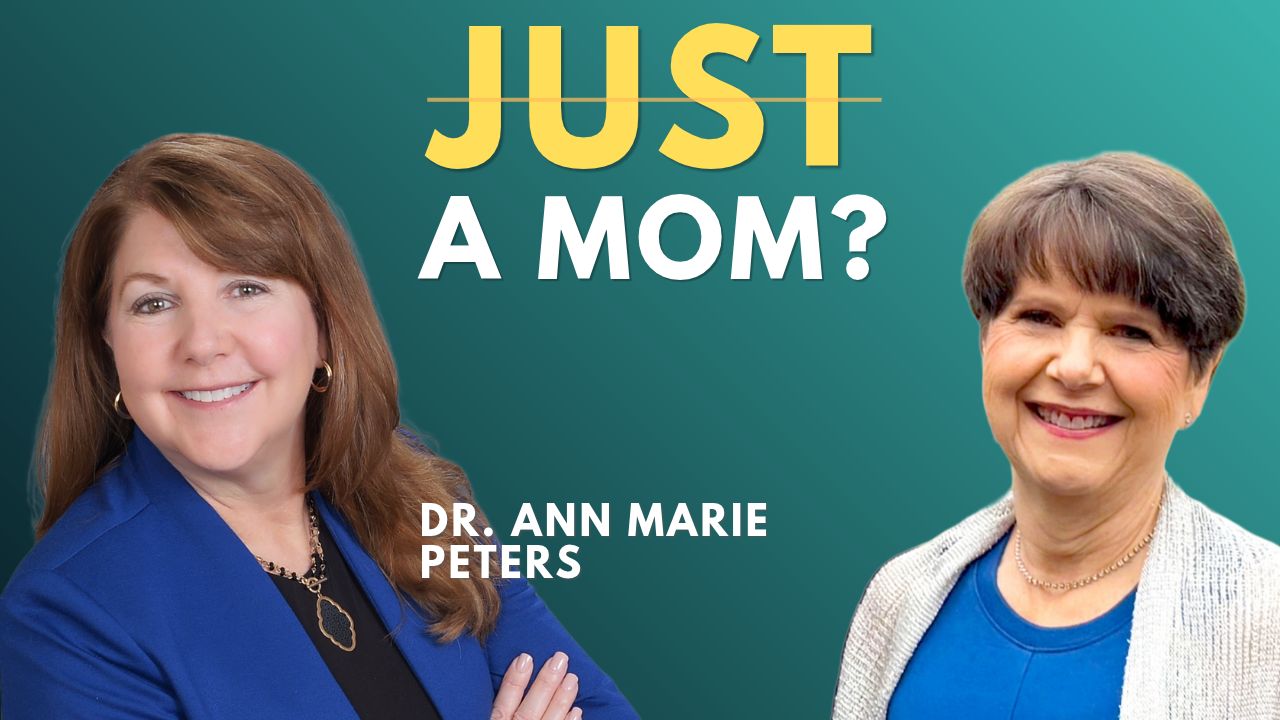
Guest: Dr. Ann Marie Peters, executive coach, leadership strategist, and author of We’ll Be Right Back | annmariepeters.com
Introduction: Reframing the Midlife Career Pause
GLORIA GRACE RAND: Namaste. Did you know that according to the Harvard Business Review, 43% of highly qualified women leave their careers at some point? Often it’s to start a family or be a caregiver. And that career pause, though, can actually affect a woman’s identity, their confidence, and sense of professional value, especially in midlife. So our guest today is going to talk about how you can stop viewing that time away from paid work as a gap to apologize for and instead reframe it as a chapter that may have built clarity, resilience, wisdom, and leadership capacity.
I almost said. I almost pronounced that word a different way, but capacity. That’s the word I want to use. So Our guest is Dr. Ann Marie Peters, and she is an executive coach, a leadership strategist, and author of We’ll Be Right Back. I like that title.
I’m gonna ask her about that title, but I, I love that. As someone from a television background, I love that. But anyway, I digress. Let me tell you more about her. Drawing on PhD research and decades of leadership experience, Ann Marie helps women reframe career pauses, rebuild confidence, and reclaim identity, purpose, and professional direction after caregiving burnout or transitions, which is something I love to do as well.
So I know we’re going to have a lot to talk about, so I’m going to bring her up onto the stage right now and welcome you, Ann Marie, to the show.
ANN MARIE PETERS: Thank you so much, Grace. I’m so happy to be here.
The Story Behind the Book Title “We’ll Be Right Back”
GLORIA GRACE RAND: Well, I am delighted. And as I mentioned, I love the title of your book because that, you know, isn’t it something that, like, you know, in fact, like, talk show hosts will say, you know, we’ll be right back after these messages.
You know, we’re not having any messages here, but what made you come up with that title as something to talk about when it comes to, you know, women navigating a career pause?
ANN MARIE PETERS: Yes, thank you for asking. So when I was thinking about this book that, you know, sometimes inspiration strikes you. And I had been jotting some notes about, you know, what is, what’s going to tell the story of what this book is about. And when I, when that came to mind, I knew it was the right title, because I feel like it also expresses what so many women feel, which is they pause their career, but they’re not necessarily thinking it’s going to be for a great length of time.
And so it, it tells the story of, of, you know, we’ll, we’ll be right back. Like, you think that’s what’s going to happen, but then it’s extended. And, and that’s where the concept of becoming a returner to the workplace takes on a different approach than if you’ve only been out for three months.
Planned vs. Unplanned Career Pauses: How Long Women Step Away
GLORIA GRACE RAND: Yeah, I guess that makes so much sense because now I know for me, I did do the pause in my career and had my kids, but then I went back and, but then I, when we moved, I wound up just working part time and sort of was, you know, didn’t want to get back into the full, working full time, especially because I was spoiled. I used to work for a public television station and I worked for the nightly Business Report.
And so we, we didn’t work holidays, we didn’t work Saturdays and Sundays. And when I moved to a new city, it was like, I don’t want to go work for a local television station and have to deal with those kind of hours. It’s like, so I, my pause then, then wound up being where I transitioned to do, starting my own business. And there’s so much I want to unpack here. Because what, and I’m curious to know, like in your research, did you find are, you know, are there different lengths of time that women, you know, pause their career?
And, and, and what are maybe some of the challenges these different time frames pose? And I know I asked like two questions in one there, but so, so start with the first one. Like, you know, are there like different time frames? I guess.
ANN MARIE PETERS: Sure, sure.
And I think, you know, to start that there, there are planned pauses and there are unplanned pauses. So you know, some women, they, they do this very intentionally and they, they plan a pause, you know, very typically around the birth of a child, but not always. Right. But there’s, there’s a plan in place. Sometimes it’s unplanned, sometimes life circumstances happen.
And, and it could be, you know, a spouse being transferred overseas and you are not able to get a visa. It can be. And on, fortunately in some cases the sudden death of a partner though. So there’s, it starts out with a lot of different circumstances as to the why of the pause. But in terms of the length of time, it really varies.
You know, if someone is on a typical, let’s say it is an infant driven pause. If someone’s on a typical maternity leave, usually that return process, while emotionally a struggle is already formally put in place in terms of the length of time you can be out, your job is held, et cetera, et cetera. And fortunately a lot of companies are extending that not only the amount of time, but also to partners which is really great when we talk about women returners, though. And in my own research, my, my research, I required the participants to have been out for a year or longer because in my research, what I found was once you’re out, you know, a year or longer, and in some cases even six months or longer, it’s, it becomes more difficult to pivot back into the workplace. And so that’s, that’s the timing now, you know, the, the timeout varies from person to person, of course.
So when it’s longer than a year, you know, it might just be a year or, you know, there are many people who maybe intend to only be out until their kids start school, but then suddenly, you know, other life, life throws them a curveball and, and the decision is made that, that they’ll, they’ll take a longer pause. So for many people, for many women in particular, because, you know, generally it is women who pause their career, for many, it, it becomes a long amount of time. Five years, 10 years, 12, etc.
The Kaleidoscope Career Model: Authenticity, Balance, and Challenge at Midlife
GLORIA GRACE RAND: Sure. Yeah.
And so what have you found? Is, is, you know, I mentioned at the beginning that it can, you know, affect women’s identity, their confidence, sense of value, and especially in midlife. So what did you find in your research in particular of, was there a difference? Since you said you were focusing on people who’ve been out of the workforce for, you know, at least a year, were most of your respondents, when they went back, were they in midlife or. And then what were their, you know, unique challenges in trying to get back in?
ANN MARIE PETERS: Sure, sure. Most of the participants in my study were midlife and mid career. And I think it’s important to mention mid career because part of my dissertation research, which I won’t get into a long description of all of my dissertation research over the years that I was working on that. But one of the important points that drove this particular topic for me was learning about the kaleidoscope career model. So the kaleidoscope career model is a theoretical foundation that is actually for men, women, for everybody.
And it measures your emphasis on authenticity, balance and challenge at different points in your career. So early career, mid career and late career career. And according to the kaleidoscope career model, women at mid career are focused more on authenticity and balance than they are on challenge. And so where, wherein they entered the, the, the their careers, the focus is generally on challenge. Now it’s flipped.
So I wanted to explore that more combined with the, the circumstance of someone having been on a career pause.
The Biggest Surprise in the Research: “Nobody’s Asked Me What I Did Before”
GLORIA GRACE RAND: Wow, that’s. Yeah, that’s interesting. And it does make sense, though. I can see it when you’re first starting out that it’s definitely a challenge, but. Well, you know what, we’ll get more into this, I know, in a moment.
But what was maybe something that was your biggest surprise in this research? What did you find?
ANN MARIE PETERS: That’s a great question. So, you know, you’re collecting data and mine was a qualitative study, but yet you are, you know, quantifying your data, etc. But the surprise for me were some of the, the aha moments for my participants, whether it was in a focus group or one on one, and the empowerment that they felt telling their story.
And that was really the driver for this book. Women lit up when they had a chance to reflect upon their career that they had had and the professional that they were before they had taken a pause. And, you know, I heard things like, nobody’s, nobody’s asked me in years. Nobody’s ever asked me what I did before. My kids don’t know what I did for a career, you know, before I was at home on a pause or whatever the pause may be.
So it was really wonderful to listen to those stories and a gift to listen to those stories and I hope a gift to the participants as well to have that chance to, to remember who they were. And as I mentioned, that was a big driver for this book, was opening up that opportunity in a practical way to anybody in the world, really. Yeah.
You’re Not Alone: Why Women Undersell Themselves
ANN MARIE PETERS: And then the second thing that I would say is this wasn’t necessarily surprising, but it was heartwarming to hear in focus groups. Me too.
Yes, that happened. Yes, I feel that way too. And people, women realizing that they weren’t alone, that is a very big deal to know that you’re not alone. And it’s. I guess the surprising part about that was that when I took a step back and thought about it, you know, you know, everybody’s different, everybody’s friend group is different, and colleagues and so on, and the dynamics are different.
But, but in, in the years that I’ve associated with a variety of interesting people, men and women alike, I realized that it’s not really something that women talk about a lot like, like the challenges that you face and the, the successes that you have. And of course that’s been documented too, that, you know, we, we as women often undersell ourselves.
Recognizing Past Experience When Starting a Business
GLORIA GRACE RAND: Oh, yeah, that’s for sure. Yeah. Yeah.
It is amazing because I know I’m remembering back to when I first started my business and I was doing copywriting, so. And I had a mentor and she we were working on coming up with a contract so that I would send out and, and to be able to have something to justify, you know, why me? You know, why are you, why are you going to hire me when I haven’t been doing this type of work? And so she asked me, well, what did I do before this? And you know, because I did take really a break for, for a little while from my previous job and when I mentioned that I was this writer and producer for the Nightly Business Report.
And, and so she’s like, tell me more about this. And, and so she’s like, well, you know, you had to engage people on television with writing stories that are going to grab their attention. This is the same thing you’re doing, but now you’re doing it online. And I was like, oh, yeah, so I should really mention that and that, you know, that I did this, right? And she’s like, yes, you need to highlight that.
Identity Loss and Confidence After a Career Pause
GLORIA GRACE RAND: Yes. It’s amazing that we, and I’ve talked about this, I think even last week, I think on the show about that we, we take for granted so often the things that come easy to us or that we have, you know, maybe we haven’t done that in a long time and we, and we forget as you, as you were talking about, so what. I think we talked a little bit about this. But what is sort of what’s real actually now I’m going to go this way. What is really happening to a woman’s sense of identity when they have gone from, you know, being on this pause and now they’re, they’re looking to come back and what, what’s happening to their identity and why does maybe sometimes, you know, they, they do have some challenges coming back into the workforce.
Yeah, let’s just go there.
ANN MARIE PETERS: Sure. It is very common to have identity loss and it’s, it’s particularly strong in that, that those first months and early years when you’ve transitioned away from your profession particularly into, you know, saying, say someone who’s a stay at home mom if you find yourself, and I heard this over and over again, you know, someone says, oh, what do you do? And, and you kind of get a deer in the headlights look. Right.
And women who have been in a profession for whom that was a large part of their identity start stumbling through something like, well, I, I’m at home now, but I used to. And then they kind of give a mini bio for five minutes because it’s hard to disconnect though, from that, that original professional identity. And then of course, as the years Go on. That, that gets forgotten as we’ve talked about. And there’s, there’s that erosion of confidence when, when women reflect on the possibility of coming back into the workplace or think about those days when in their last professional position, you know, could I do that again?
I don’t know if I could do that again. I haven’t for this many years or this many months. And so that’s where a lot of the identity loss comes in and the self confidence erosion. And I’m sure, Grace, you’ve heard stay at home moms in all walks of life who say, I’m just a stay at home mom.
GLORIA GRACE RAND: Yeah.
“I’m Just a Stay-at-Home Mom”: The Hidden Skills of Motherhood
ANN MARIE PETERS: And that’s something that is such a gross underestimate statement of what most every woman is doing in that, in that role. And it’s, it’s once you start talking to someone and saying, well, tell me all the things that you do and, and you start pointing out, as you were mentioning, perhaps this interviewer did for you, Grace, you know, pointing out, well, you know, you just told me that you ran the school fundraiser and how much money did you raise? How many people were on that committee? You know, all of a sudden we’re talking about, we’re talking about management skills, we’re talking about, we’re talking about managing money, we’re talking about marketing, we’re, I mean there, there, there are hidden skills. And that’s part of the book too is talking about these hidden skill sets of motherhood, time management.
Huge, right?
GLORIA GRACE RAND: Oh yeah, absolutely. Yeah. And, and I’m thinking also of, what’s the word I’m looking for? Well, like, like negotiation skills, you know, which you probably even did with your kids sometimes, you know, but certainly if you are ever on like a, you know, a PTO or pta, whatever, you know, doing some of that, you’ve got to be, you know, or looking for, you know, getting people to donate goods.
So you’ve got to have to talk to those so many different things. And I, I, I’m sure that I haven’t even thought about this and there’s so many things that we just again, that we just, we take for granted or we don’t really appreciate how those, those same skills that we, we just did because we were trying to be a good parent or what have you, but can translate into things for, you know, to be employable in, you know, in a different job possibly.
Why Women Returners Choose Nonprofit and Mission-Driven Work
GLORIA GRACE RAND: And then actually that, that’s one thing I’m curious to know is do you, have you found, even when you were doing this research, are women who have Had a pause. Are they? Because I know also it’s, you know, it’s been a challenging labor market.
Are, are they opting, you know, because if, you know, are they trying to find maybe a new job or a similar job and maybe not having it, are they, or are they just deciding to go into business? Because I know a lot of women are going into business for themselves. What did you find in your research?
ANN MARIE PETERS: So that’s really interesting. Question, question.
What, what I found in, in my initial research, as I was looking at the topic of women in the workplace, women opting out of the workplace, just generally before I got more specific into my own research for my dissertation, is that as early as, you know, like 1995, there was a large study that was done on women who had opted out of the workplace. And in that particular study, 100% of them did not go back to their original career sector. Now, you know, there have been many studies done since then that, you know, have varying percentages, and it’s of course, dependent upon the sector as well, but particularly in business, in a, you know, a corporate career. Let’s categorize it that way. So one of, you know, one of the driving questions of my research was the women that I interviewed, and we already discussed that one of the parameters was that you had to have been out of the workplace for at least 12 months.
Most of them had been out for longer than that. The other parameter was that they were working currently, had gotten a job at a nonprofit as their first position when they came back into the workplace. And the reason for that is, is, is really tied up in that question that, that you just asked, because in the research, we already know that women are not returning to their career sector. These were all women who had been in a for profit career sector of some sort, whether it was an engineer, a lawyer, you know, a bank or whatever that was. Then when they opted back in, they, they went into a nonprofit.
Choice, Not Default: What the Research Revealed
ANN MARIE PETERS: Well, the research tells us that 70% of the people who work at nonprofits or social organizations, if you will, are women. And, you know, the research also tells us that women returners tend to go back to social organizations. So my question was, is this because you were facing the challenges that we know exist, like career gap, ageism, you know, loss of confidence, all of the things that are at issue. Right. Is it, is it that, is it that you cannot get back into your former career sector, you wanted to, but you can’t, or are we going back again to this, this idea that’s planted with the Kaleidoscope career model that there’s been a shift the type of work that somebody wants to do.
And what I found was that women were more focused on authenticity and balance as was reflected in the theoretical model. And they were looking for positions that spoke to them, that gave them a sense of a mission they could get behind, a purpose. And so it was a matter as it turned out of choice, not default because. And get back into their former career sector.
GLORIA GRACE RAND: Oh, that’s so wild.
And, but it also makes sense because I just, I know from few ladies that I, I am connected with that we are part of a. We’re, we’re cohort. Well, we’re, we’re hosts, we’re rotating hosts for another show and, and it’s a service oriented show. So we’re not, you know, we don’t get comp data for this. We are just doing it to provide service and we are all, you know, women in, in midlife.
And so we’re just, you know, donating our time to this. Right. So yeah, I, I love that it does seem that way that women are finding, you know, or choosing to be able to do this to, to find work that does provide more meaning to them. But it is interesting that it’s really that you did find a lot of them going into the non profit sector specifically though I find that fascinating. What did you find that is.
Was there specifically? I mean was it, it was it was for purpose or, or are they even. Are they. Do they maybe. I wonder if, if they are just doing that as like to start getting their feet wet, you know, kind of getting.
And then maybe once they’ve got some experience there, I wonder if they’re then doing something else. Have you looked into things?
Authenticity, Balance, and When the Job Finds You
ANN MARIE PETERS: Yes, yes. And, and I like you mentioned earlier, Grace, that you were not wanting to get back into the same, same type of hours, et cetera. You wanted more balance.
So that’s the other side of this. First there’s the authenticity of. I want to feel good about the work that I do. And if I’m going to a lot of women say, you know, something like this and if I’m going to spend time away from my home and my family, I want it to be for something that I feel like matters that I, I like the mission. But then there’s the balance part.
So there’s a few different things that are. Were going on there. One, traditionally social organizations are more likely to have flexible work hours, flexible schedules, etc. So that’s, that is appealing. Now we all are hopeful that that’s becoming more prevalent in, you know, in, in the entire workplace.
But I would say that social organizations, nonprofits probably still have the corner on that. So that balance was, was very important. Also a surprising thing in, in the participants that I worked with was I thought there would be a lot of conversation about the challenges with their gap on their resume. And while they were all concerned about it, a number of them actually didn’t have a challenge finding a job because of job found them. So they were active in their communities and even if it wasn’t in the organization that they were, they were eventually recruited for the person who was looking for someone at that organization.
So for, for example, there was a healthcare executive who, you know, spotted this woman who was just a firecracker in the community and she got stuff done and he could see that she was talented and so he, he approached her and said, you know, I’d really like you to come back to work. And she wasn’t even thinking about going back, back to work at that point. My point is that it’s, it’s sort of a combination of, with philosophical. I want to do something that’s meaningful to me. Balance.
I want, I don’t want it. I heard this again over and over again too. I don’t want to be traveling all the time. I don’t want to be working 80 hours a week again. I’m done.
Yeah, that, that hamster wheel, there’s that balance part and then there’s some, some circumstances involved too with the friendliness of, of social organizations and non profits and also the connection that people often have already in their community.
Overlooked Resources for Returning to Work After 50
GLORIA GRACE RAND: That makes so much sense. So let’s talk a little bit about.
Are there any particular mistakes possibly that women make when they are looking to get back into, you know, the workforce? And are they just, you know, or, or something that maybe they wish they knew maybe before they started.
ANN MARIE PETERS: Sure. I think that there are so many resources available that can be helpful and so not using the resources is, is. I, I don’t like to, I don’t want to use the word mistake but is an oversight that, that women encounter and it’s not for lack of, of knowledge or intellect.
It’s the fact that you just aren’t aware of what’s out there. And so, you know, many women don’t realize that LinkedIn for instance, you can be on LinkedIn and it’s actually becoming more and more prevalent for, for people to be on LinkedIn who are not employed. And, and that’s a great way to, to get reconnected there are a number of ways that you can can access information on building a resume, for instance, to return to the workplace. After a long pause. There are social organizations that are helping to connect companies with that are interested in for instance returnships with women who are professionals who are wanting to return to the workplace.
So you know all of that in my book, it’s. I feel that it’s an important part, the last part of the book where, where we talk about some of those nuts and bolts and a 90 day plan and maybe of most value that resources section where you know, nobody can capture everything that’s possibly available. But I feel like it’s a place that can then start that process of okay, if I look at this then I should also look at that etc. So I, I think just not using the resources and, and another example too of I would say something that that is not commonly known when I’m coaching people or when in my business interview savvy that I had years ago too.
Free Alumni Career Services and LinkedIn Groups
ANN MARIE PETERS: No matter how long ago you graduated, most universities will provide alum alum with, with career services. Oh. And so it varies from institution to institution, of course, but it’s worth a phone call or an email to find out what, what is available to you for free.
GLORIA GRACE RAND: Wow, that’s a great resource. And I didn’t even think about that.
But yeah, because I mean you know, they’re always hitting up for money anyway now I’m always getting emails from my university, but yeah, why not check them out and see and certainly at the very least I know There are also LinkedIn groups for you know, of the universities so you could, you know, join those and use that as a way to connect with people and find out, you know, what’s. What’s going on, what, what do you know or who do you or who do you know especially that might be interested in helping you out?
Inside the Book: Remembering Who You Were
GLORIA GRACE RAND: Trying to think that this has been. There’s so many good things here and what, what do you think has been or is the, the maybe the biggest takeaway from the book that you want women to take from it?
ANN MARIE PETERS: Well, if it’s okay with you, Grace, maybe I’ll step back and, and describe the, the parts of the books so that maybe it’s a little. It makes more sense when we talk about ways. So the first part of the book is really, I would call it a remembering section.
Let’s actually take a minute. And you need to remember your story. You need to remember who you were in that profession, good and bad and why did you leave and you know, many, many women, they don’t just leave to hold an infant 24 7. They probably leave because there were other things going on. Maybe they weren’t getting paid enough.
May there was harassment, maybe there was glass ceiling. There’s always a lot of, so, a lot of reasons. So unpacking all of that, who you were, why you left, what were the great things, what are the things you were most proud of in your career, in your professional life before you were on this pause, then it’s important that we take time to talk about all the great gifts and benefits of the pause that you’ve been on. You’ve probably enriched your family, you have probably participated in your community and helped your community all in any, a number of other things. We explore that all of the positives of having been on a career pause and personal too.
Maybe you made a great friend group. There are so many things that it’s important to remember and think about.
Grief, Body Changes, and the Sandwich Generation
ANN MARIE PETERS: But then as we talked about earlier in my research, there were also topics that women were so happy to have an opportunity to explore and understand that they weren’t the only one that was feeling this way. And that’s everything from confidence loss, that’s physical body changes, which we know is a challenge at midlife for, for women, that was grief. You know, grief in the sense of, of, okay, first you might have lost your professional identity and then, you know, your, your little toddlers get bigger and you’re not mommy anymore.
And then eventually they, they go off to college. So there’s that grief. So the grief of the sandwich generation. Right. Our role with our parents might be changing as well.
So, so exploring those challenges on an individual basis with the support of knowing this is researched and you are not alone, so let’s do this together. And then taking all of that and looking at what are the hidden skill sets of motherhood, what are the hidden skill sets of the pause? The things as we discussed earlier that you’ve been involved in, that you did, that we can unpack and name in a way that’s going to be interesting and important to an employer. And then really putting it all together in a practical way with a 90 day plan and resources to get you going on this process with a lot of encouragement along the way.
Keeping a Running Inventory of Your Skills
GLORIA GRACE RAND: Yeah, I love that.
And I wish I, I’ve had this resource several years ago, but, but it’s still, you know what, But I, I’m thinking that it’s never too late to actually, you know, even start now, even if you’re in maybe another career now. Or you know, you’re working and I think it’s probably still a good exercise to do because again, you know, we are tending to live longer and so just because you, you, you know, maybe you’re back in the workforce now, maybe you’re, you know, very happy at a non profit but again, life can rear its ugly head and something else could happen and you might wind up taking another pause and then so I think it would be a really good exercise to have and maybe even like, you know, you have a, if you’re a computer person like me, have a folder on your computer and just keep, start keeping track of all the different things that you’re doing and have done and, and be able to, to quantify them or quality, whatever. I’m not a researcher but anyway, just keep a list of it, that’s what I’m trying to say so that you can add to it and have it to, to refer back to.
EDITOR FLAG: Speaker uncertain for “Excuse me one second.” Assigned to Ann Marie, since her reply follows.
ANN MARIE PETERS: Excuse me one second. Well, and as you know, with your, with your topic and, and I love the, the title of your show, design your life your way and, and the business that you have, I think this really is in alignment with that because it’s, it’s, it’s, you have to reflect in order to move forward.
And so you know that this gives women the opportunity to kind of remember the, the powerful person they may have been in their previous career. Even if it’s just, you know, the contributions that, that you made and then, then looking at the contributions that you made when you were on your pause and bringing that all along with you in a way that maybe most of us don’t think about on our own because, because we are underplaying our talent, are underestimating the, the skills that we and have been exercising all these years. It’s not a blank resume.
GLORIA GRACE RAND: Yeah, yeah, that’s for sure. Oh my goodness.
Your First Step: Naming Your Fears and Building Confidence
GLORIA GRACE RAND: What’s the, what’s the very first step that you would invite a woman to take? Other than of course picking up your book and reading it. But you know, but say now that they are, they’re ready to, you know, come back now from, from a pause. And so what do you think should be her first step that she should take? Especially if she, you know, suspects that her, this next chapter is going to look, you know, different from her last one.
ANN MARIE PETERS: Right. You know, I think one of the important things is to start to overcome those fears. So name those fears. Make, make a list. Maybe even if it’s only three things that are concerning to you, you, you know, figure may be too strong of a word, but something that, that’s concerning to you.
So somebody might say, oh, well, you know, I feel like my technical skills aren’t, aren’t going to be up to speed to go back, to, go back to work. Well, you know, is that a real fear? It might be. Maybe you haven’t had any experience with that for, for a while, but there are great ways to overcome that. You know, your local library has, has classes and computer literacy of all different kinds.
Your community college, you know, the high school, there’s always a book, an online course. You know, you can usually find something on LinkedIn, on YouTube, etc, so, you know, naming those, those few things that are really maybe kind of, I’m gonna say, eating at you, you know, that are niggling you. You can’t do it because you’re ex. So if your ex’s technical skills as an example, that, that might be something. Maybe it’s networking.
Small Steps to Rebuild Networking Confidence
ANN MARIE PETERS: Maybe you feel like, gosh, I haven’t been out and about with people other than, you know, in my own community for years. I don’t know what to do. I don’t know what to say. You know what, you don’t have to start with a major conference in Las Vegas. You can start by just speaking up at perhaps meetings that you already attend to gain confidence, whether it’s a book club or a PTA meeting or your, your family dinner table.
You know, the. Just doing little steps and then, you know, do go to some sort of networking event and, and just make it a goal to talk to one person. So, you know, taking, I think, the fears and, and acknowledging and knowing that baby steps are steps and that’s how you’re exercising that confidence muscle.
GLORIA GRACE RAND: Absolutely. And, and knowing that you’re not alone.
As you mentioned, there are millions of women who are going through the same thing or have gone through the same thing and can relate. And so you’re, you’re absolutely not alone. And, you know, if you’re active on social media, that can be something where you could say, is anybody else, you know, doing this? And, and there are tons of groups for women over 50, women over 60, you know, whatever, and you can find out what’s going on there and get some, at the very least, some encouragement and like, you know, cheerleading, you know, you know, do this.
Career Pauses at Every Age and the Rise of Midlife Entrepreneurship
ANN MARIE PETERS: Absolutely.
And as interesting as I’ve been talking about this research over the last few years, it’s, it really stretches across a wide range of ages because what I’ve found is that young women appreciate the opportunity to be thinking about these things. Before they may, you know, go on a, a pause and there are resources for, for that like if you’re planning. But then you know, women who are, you know, maybe just, just starting to turn that corner into preschoolers, you know, starting to, to be in kindergarten and all day school and so, and then so all of a sudden they’re like, you know, maybe the time. So you know, women, let’s say in their early 30 or early to 30s to 40s and then there’s some of us, you know, who your last kid go, shuts the door behind them to go to college and, and women are, are deciding that now it’s my turn and I’m gonna, I’m going to either go back to something or start something new. And entrepreneurship is very common.
GLORIA GRACE RAND: Very common. Yeah. Well, and it makes sense because again, you know, we’ve mentioned sometimes it is difficult and maybe you can’t find a non profit near you or something to be able to get some work so that, yeah, when in one in doubt, start your own business and, and see if you can’t help people that way. And, and then you’re, you’re in control and can see about what you can do to be able to make a difference, make a positive difference for others as well as yourself.
Final Encouragement: You Still Have the Skills
GLORIA GRACE RAND: Is there anything else that maybe I didn’t ask you that I should have or any other last point that you want to make here as we start wrapping up?
ANN MARIE PETERS: You know, I think the last point that I would make is I hope everyone feels encouraged because I like to think that even if we aren’t making leaps in advancement in terms of workplaces having flexibility and having more solid plans to keep women able to be in the workplace and also have formalized entry paths back in. Like to think that that’s, that’s getting better and better. Probably not quick enough for, for most of us, but I guess leaving with that encouragement that you know, you’re not alone, you have the skills, you have the power, it’s all still inside you. And you.
Every, every step counts. Doesn’t have big sweeping activity or action. Every step counts to get to where you want to go.
GLORIA GRACE RAND: Yeah. Because you know, you’ve made it this far and you’ve, you’ve done probably a lot of stuff and again a lot of things that maybe you didn’t even weren’t aware of that couldn’t translate into the workforce that are really vital skills that people spend money to have to train to do it or they go to school to learn how to do it.
And it’s been something that you’ve probably been doing for the last couple of years. So.
Why Employers Value Women Returners
ANN MARIE PETERS: Yes. Yeah. And from an employer standpoint, guess what?
They love women returners because generally they show up for work, they show up on time. I mean, people refer to it as soft skills. I. Essential skills. Right.
When work, you actually are doing work, you, you know, come, you’re conscientious, etc, you, that set sets you apart right out of the box.
And it’s starting to be more recognized.
GLORIA GRACE RAND: That’s great.
Well, I’m so glad that you were here today to be able to shed some light on this and helping, helping my audience to, to know that you can design your life your way and by taking advantage of, taking inventory, I should say, of the things that you’ve done for your whole entire life and being able to still apply them now in possibly a new way that you didn’t think about before.
Where to Connect with Dr. Ann Marie Peters
GLORIA GRACE RAND: So if folks want to be able to get a copy of your book and connect with you and learn some more about you, where’s the best place for them to do that?
ANN MARIE PETERS: If they will go to annmariepeters.com all of the information is available there. And I would be just so, so pleased if this, this wonderful interview is helpful to your audience. Grace, I really appreciate your time.
GLORIA GRACE RAND: Oh, well, I appreciate you being here as well. And I, I know it was, hey, beneficial to me. Again, like I said, you know, I feel like I want to even just go back in because I bet I still have forgotten things that I’ve, that I’ve done and I, I need to make sure, I need to make sure my LinkedIn profile reflects them, you know.
ANN MARIE PETERS: Yes, definitely.
GLORIA GRACE RAND: Well, thank you again for joining us today and I really do appreciate you and I encourage everyone to go check out the show notes.
You’ll be able to have the link to her website and be able to get, get some more information, get the copy of the book and all that good stuff.
ANN MARIE PETERS: Thank you, Grace.
GLORIA GRACE RAND: All right. And I want to again thank all of you for joining us today and I, I hope that you really did get a lot of value out of our discussion and until we meet next time, go out and live boldly this week and on purpose.