Welcome: What Misalignment Is Trying to Tell You
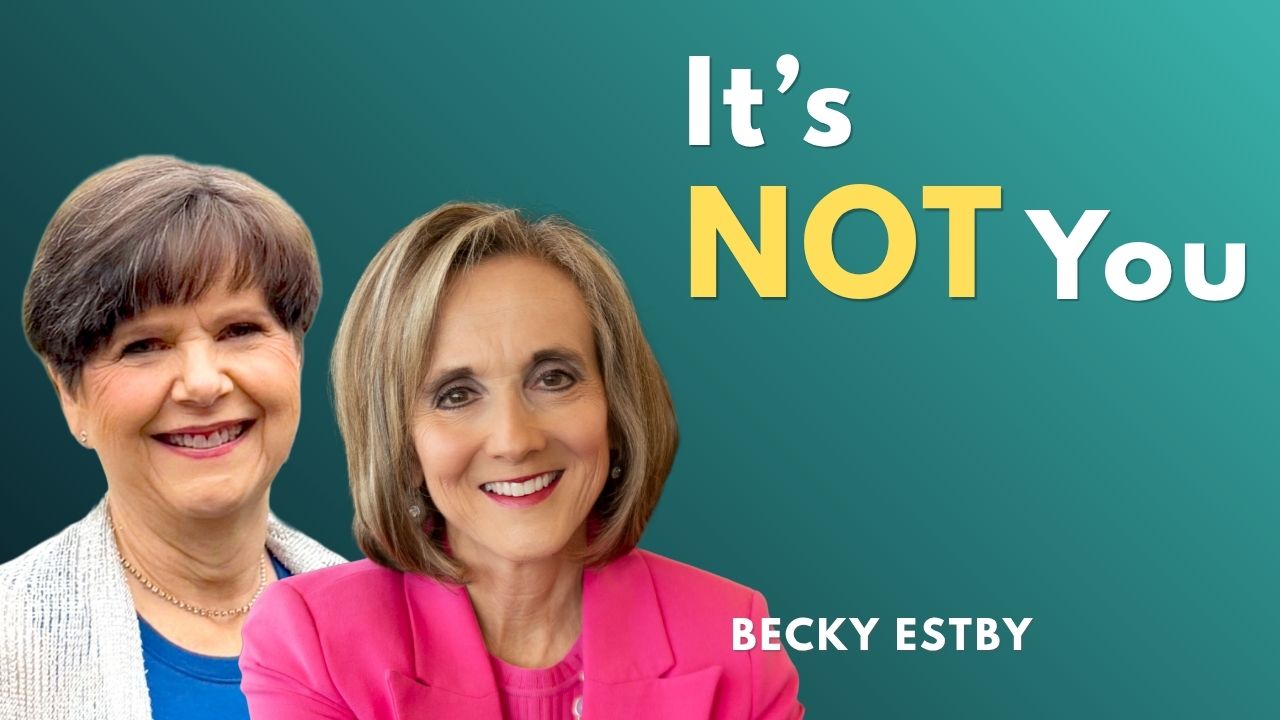
GLORIA GRACE RAND: Namaste. Success is supposed to feel like you’ve arrived, right? And yet a lot of high achieving women get there and feel unseen instead. So that’s what we’re going to be talking about today. We’re going to be talking about what misalignment is really trying to tell you when I’ve gotten it.
Wonderful guest who’s going to be joining us in just a second to really dive into this. And her name is Becky Estby and she is the CEO of Next Monday where she helps professional women in leadership grow through peer groups, coaching events and consulting. And we’re going to get into more about that in just a second, but let me bring her on to the stage right now and officially welcome you, Becky, to Design Your Life Your Way.
BECKY ESTBY: Hello, Gloria. Thank you so much for having me.
Growing Up on a Dairy Farm: Work Ethic and Finding Your Voice
GLORIA GRACE RAND: Well, I, I’m really excited to get into all of this because I, we were talking before we, before I started the recording that I think you and I are very much in alignment about how, how we like to serve women and how what we want them to accomplish. And, and that’s why I have you on the show, of course. And, and of course we’ve got, you know, different ways of getting there, but I, in doing my research about you, I, I were definitely different in, in this way is that you grew up the youngest of six on a dairy farm. I was not. I’m the youngest of three in the suburbs where I grew up.
And, and it said that your, your first job came because of a cow, which I thought was important. Interesting. So I’m wondering how did that upbringing actually shape the leader you became and the coach that you are now?
BECKY ESTBY: Yeah, well, growing up on a dairy farm, first of all, is a lot of work. And being the youngest of six, there was four girls, two boys.
And I think there was a very traditional role, you know, roles that we played. Definitely the women did the housework and the flowers and the gardening, but then some shared roles. I, you know, we did some pickup rocks and field work in that as well. The boys did the milking. But I think I learned early on that my mother really, you know, wanted to make sure the meals were on the table and those kind of things.
And, and so for some reason I, I never felt like I needed to be anybody’s servant. And, and I always knew that I needed, if I wanted to get somewhere in life, doing what to do, I was going to have a voice. And so I think the traditional farm family gave me a lot of work ethic, showed me how to be A great team player because you all have to pitch in and make it work. But it also taught me in an ironic way that I was going to need to have my own voice.
GLORIA GRACE RAND: And I, I can imagine, I think probably being the youngest of six probably really did play a part of that as well.
Because you want to be heard and I’m sure, you know, you’re travel probably trying to, you know, compete with your siblings. It’s like, you know, hey, right.
BECKY ESTBY: And there was good and bad in that, in that, you know, they would be like, you know, back you go, you go ask mom and dad because they like you. But then there was also like I could as the youngest say, you know, dad, I’m tired and he’d let me drive the tractor or sit in the back of the wagon and then my siblings would throw rocks at me.
GLORIA GRACE RAND: Yes, yes, I can… Yeah, I know my, well, there was 10 years difference between me and my sister. But yeah, she, she said that I was, I was spoiled and, and looking back at it, it’s like, well, yeah, I guess I can kind of see that because essentially I became like an only child when she went off to college. You know, my brother was in the Navy. So yeah, I did have some advantages that, you know, she probably didn’t. And it’s like, I can’t help it.
I’m sorry.
BECKY ESTBY: Yes, exactly. You can’t apologize.
What Decades in Corporate HR Revealed About High-Achieving Women
GLORIA GRACE RAND: Yeah. Now you, I also read that you had spent decades in corporate, in the corporate world, in HR and organizational development before joining Next Monday.
So I’m curious, what did you see there, like in high achieving women specifically that made you want to be able to build something different?
BECKY ESTBY: Yeah, so I saw a lot. Let me just say that. So I was the senior HR leader for many, many years in different organizations. And, and what I saw was often you’re in male dominated environments.
And also, you know, my, myself, I was often the only woman at the table or 1 of 2 or, and, and women think and feel and lead differently. And so sometimes you really feel kind of unseen in a, in a world that was really not built for, for women in mind, it was built for men in mind. And sometimes you feel unseen because they’re not really understanding your perspective or you’re not invited because they do the hunting trips or the golf trips. Not that women can’t go, but A, sometimes you don’t want to and B, sometimes they just don’t invite you because that’s just awkward. And so we miss out sometimes on just those regular opportunities to get to know the other leaders.
And so I feel like sometimes women have to work harder. They’re trying to balance everything in life. They’re trying to balance the home life, the kids, the. The work life. And I. I’ve seen so many women just work harder and harder and harder to prove themselves and get so exhausted and not really have an outlet instead of turning towards people that could maybe help, oftentimes they just dive in deeper because they think, if I only work harder, if I do this a little bit longer, I will get there and all will be okay.
And. And the sad truth is, often it isn’t. And. And, you know, they run this rat race for way too long, and then one day they wake up and they say, I don’t know if I want to do this anymore.
Your Body Knows Before Your Mind Does
GLORIA GRACE RAND: Yeah. And it’s funny, I was actually talking about this myself today because I was recording a podcast episode and where I was talking about this, too, and I. Well, and I’ll just throw this hypothesis out there for you and whether you found that valid or not, but I think one of the things that. What happens when we’re into this, like, pushing, is that rather than pushing, I don’t think we’re giving ourselves enough time to kind of step back and pause a little bit, you know, and take a break. Did you.
Has that been what you found, is that, you know, sort of that symptomatic of when women are just kind of trying to do it, trying to do it all instead of taking a break for themselves?
BECKY ESTBY: Yeah, absolutely. I think that our body tells us sooner that there’s a problem than our mind is willing to go there. And so, you know, myself included, during stressful periods, I thought I was holding it all together. I thought that nobody else could tell that I was struggling.
But, you know, once you get yourself out of that situation, your family tells you, like, you’re a completely different person now that you’re. You’re outside of it. And so, you know, one thing I just really encourage women is start paying attention to those physical symptoms. You know, they’re going to the doctor, they’re doctoring for things that the doctor’s saying. We can’t find anything medically wrong.
And stress has a huge impact on our health. And as professional executive women, you know, keep driving, keep driving, keep driving. Something has to give. And oftentimes, unfortunately, it’s their. It’s their health first.
Stress Symptoms Doctors Can’t Explain
GLORIA GRACE RAND: What? Well, you mentioned that the doctors aren’t finding anything. What kind of symptoms are more women having? So that maybe someone listening to this will recognize it in themselves and say, oh,
BECKY ESTBY: yeah, you know, migraine, headaches. You know, I got to a point once in my career where I was taking a bottle of Advil to every meeting I was going to.
You know, weird symptoms like things that they can’t even explain. I myself had some liver issues at some point for no reason. Not a drinker, not no reason I should have had. And all I could chalk it up to is it went away after the stress went away. So your body, you know, it’s got to come out somewhere.
And like I said, a lot of times the body knows before you, you know, accept that, hey, I can’t keep going. So rather than reach for help, a lot of times they just. They just. I’ll just work harder. I’ll just work harder.
And they. They don’t take the time to really breathe and take the pause that they need to take.
The “It Must Be Me” Reflex: Why Women Blame Themselves
GLORIA GRACE RAND: Yeah. Why. Why do you think it is?
I mean, that we. And I know I’ve. I’ve. I’ve. I’ve done this as well in the past, but where do you think this comes from?
This feeling that, like, we have to, you know, we have to kind of keep going, keep. Keep pushing ourselves, even when our bodies are telling us no is strictly like a cultural thing or. Where do you think it comes from?
BECKY ESTBY: I think there’s definitely a cultural that, you know, women feel like they’re caretakers. Right.
And so women tend to want to take care of everyone. And. And then I also think that there’s a systemic issue of. Of not feeling like women don’t have, I would say, as much confidence oftentimes than men do in the work environment. And what I mean by that is, a lot of times when, you know, if they’re getting any feedback, they then think, you know, well, it must be me.
It must be, you know, something I’m doing wrong, so I’m going to go get more credentialed or I’m going to work harder, and that’ll solve the problem. And oftentimes it doesn’t. It’s still a difference between, you know, the. The system was built for, for, you know, traditionally for males. And, and then women were brought into that workforce, and there’s still things that happen that make women sometimes question, you know, like comments.
You know, I got comments like, you know, who’s watching your children when you travel? It’s like, well, their father’s watching their children, but you want to ask a man that question? Or. One guy asked my husband. He saw me.
My husband and I. My husband dropped me off at work, and I was Going to be traveling. So I had a suitcase. He asked him two months later if he had divorced me yet because he wouldn’t let his wife travel. And so, you know, just messages along the way that suggest that you’re doing something wrong, like you’re supposed to, you know, be all for everyone.
And when you start feeling like you. Something’s got a break, you feel like you’re a failure. Instead of saying, maybe the system isn’t ready for me or the system isn’t taking care of me, we tend, women tend to say, it must be me. And then they, you know, go down the spiral of feeling less than and losing their confidence. You know, confidence can come and go, go.
And a lot of times they go into losing their confidence phase because they’re getting these messages.
Still Facing Double Standards in the 21st Century
GLORIA GRACE RAND: Yeah, it’s so, it’s so frustrating and that this is, that we’re still dealing with this and you know, this is the 21st century now. You know, it’s the 2000s. And I remember, you know, I’m old enough to remember the women’s lib movement of the 70s. And, and I was, I think still.
Well, I guess I’m in, I was in that transitional stage. Not quite. I was born at the tail end of the baby boomer movement and that, but my mom did work outside the house because we grew up in Michigan. And I think the economy, the way it was, it was like we needed to have a two income family. And so I know she had to deal with a lot of this stuff, but you would think, I was hoping that by now that women still could, could be more confident in themselves and, and really not have this idea that we, we should be treated the same, the same expectations that as you mentioned that, you know, it’s like you don’t ask a man, well, who’s taking care of your kids, just assume that the woman is going to do it.
But why. And in fact, it would be so much better when, when men have that opportunity to be able to nurture, show that nurturing side of themselves, to take care of the kids, it’s so much better for them.
Uncommon Courage: Awareness, Integrity, and Finding Your Peace
BECKY ESTBY: Yeah. And you know, the, my goal was to really like paint a picture of just making women aware, kind of being awakened to the fact that you’re not making this up. You’re not, you know, you are experiencing some things and it has gotten better and there’s some really wonderful cultures out there.
And, and so this isn’t meant to be like woe is me. It’s, it’s really meant to be like there There is something you can do. You can have uncommon courage. You can become aware of it. You can then, you know, move to having courage, stay in your integrity, be willing to speak up and.
And, you know, not just let those comments internalize. And then in the end, you know, finding your peace by really going after what is going to make you happy, not what someone else’s expectation is of you.
Defining Success on Your Own Terms: Inside Next Monday’s Peer Groups
GLORIA GRACE RAND: Yeah, that is so important to be able to do that. And that’s. That’s really what I love talking about here on.
On the show is because I know that I’m so much happier now that I’ve done different things in my life, changed different aspects of how I’ve. How my relationship is with. With my husband and different things like that, to be in a better place where I am feeling more fulfilled. So I know that that’s what a lot of you’re about. A lot of your work about.
A lot of your work is about. My brain gets ahead of my mouth sometimes. It really is helping them to define success on their own terms. So what does that process actually look like? Is it.
It’s a mindset shift? Do you do exercises or both?
BECKY ESTBY: Yeah, well, the work we do with Next Monday is really. We’re well known for our peer groups, and so our peer groups actually just had one this morning. And it’s.
It’s just so beautiful to see women come together and lift each other up in a completely confidential space and no judgment. I think sometimes women tend to judge each other, and we’ve built these peer groups in a way that we want you to bring your whole person. So they are executive peer groups. They’re for professional women. But we want you to come with all of you.
Everything that’s going on in your life is fair game. We want you to share what’s holding you back, because in firm believers, that what’s happening in your life does impact your leadership at work. And so sometimes in the corporate environment, we want people to just show up and be their professional self. And we start questioning them when either they’re, you know, maybe they’re going through something with a sick parent or child, or maybe they’re going through menopause, and all of a sudden they’re acting differently. And no one just stops and asks what’s, you know, this isn’t like you.
What’s going on? How can we help? And so our peer groups really provide a way for them to get that kind of support in community with other women. So one way we do this is. Is by encouraging community.
We also do Executive coaching. And so, you know, working one on one with women on how to, how to go from feeling that overwhelm exhaustion to really examining are you doing the work you even want to do? You know, is it time for a change? And the answer isn’t always to leave. Sometimes the answer is just, I need to start speaking up and asking for something and, you know, and making a change in one aspect.
Whether, you know, there’s, there’s always a way to get yourself out of something and, and so just helping them walk through that journey and realizing that they’re, they’re not alone, they’re not crazy, and let’s figure out what, what they do want.
Creating a Safe Space Where Every Woman Has a Voice
GLORIA GRACE RAND: Yeah, I love being with other women to be able to share what is going on in, in your life, because you’re right, it can be. A lot of times it is the personal that can impact the professional side of, of your life and, and being able to talk things over with other women, I think is, so is a really great thing to be able to do. But I, I wonder is, do you find that or let me just have. In working with women and getting them together, do I know sometimes that, like, I’ve been in a mastermind before where sometimes there, there are people who are really ready to just go out and, you know, talk, and then there’s others that maybe hold back.
So how do you ensure that everybody gets to have a voice?
BECKY ESTBY: Yeah, so in our peer groups, we’re very intentional. Intention. I can’t say that word. Intentional.
GLORIA GRACE RAND: Intentional, I think.
BECKY ESTBY: Thank you. We’re very, we take a lot of time to really make sure that they’re ready to be vulnerable, but also provide advice. So it’s got to be both ways. Right.
And you’d be amazed how quickly women, when they feel safe and they feel like they’re with people that understand what they’re going through, how fast they’re willing to share and be vulnerable. Our groups are not for women who really just can’t. Can’t get there. You know, and we, we try to say that really clearly up front that if, if what you want is Leadership 101, this is not for you. This is bringing your whole self to, to be the best version of you possible.
You really have to deal with everything from your personal to your professional.
Courage, Belonging, and Purpose in a Midlife Leadership Transition
GLORIA GRACE RAND: Yeah, that’s good. And, and I think that is wise. You know, it is important to set that, set that container and, and let people know that, yeah, this is a, this is a safe space that you can, you can share and, and also the expectation that you’re going to be able to help others as well. That’s.
That’s certainly what I like to do when I’m running groups like that as well. Now I know. So you talk about courage, belonging, and purpose as being connected. So how do you see those three working together in a woman’s life, especially when they’re like, say, in the middle of a leadership transition?
BECKY ESTBY: Yeah, well, so I believe that one of the missing ingredients in leadership is courage, men and women.
And I’ve seen too many circumstances where leadership teams don’t really say what they really believe because they’re afraid. They’re protecting their title, their pay. So sometimes they choose comfort over the integrity piece or saying, doing what’s right. And I saw that way too many times as a human resource leader, as an executive on an executive team, and it was really disappointing to me. And what happens when you do that is that you kind of sell your soul in.
In a way, and that starts chipping away at. At you. And so you may stay in a situation because you’re afraid to give up that title, the paycheck. You’re afraid to take that journey forward. It’s scary to leave a really successful career and, you know, go out and venture out on your own or do, or change industries or do whatever, whatever it is.
But I think that you’ll see a lot of. I’ve seen so many women in their 50s, they hit 50 and they’re experiencing that, you know, menopause and all kinds of things, and they really start questioning, am I even enjoying what I’m doing? And so they have to have that courage to really, you know, speak up and, and start thinking about what they really want, stay in their integrity by having a voice, and then go after something that’s going to give them purpose and in life. And sometimes that isn’t the career you’re currently doing. I just had a woman say to me yesterday that.
She said, I always thought I wanted my next step was to be, you know, a vp. And I’m not sure I even want that anymore. But that’s scary. And so it’s really about, you know, how. How do you make sure that you’re following your values, your integrity, having that courage, finding that purpose, and then ultimately having peace because you get to go do what you really are meant to do or that you have a passion for doing.
When Fear Keeps Us in the Wrong Career
GLORIA GRACE RAND: Yeah. And. And I will say, for my experience, it’s. It’s not just women who have that fear, because I. I was married to a man who stayed in a job for A very long time because it was, you know, we were making good money and. And he, it was.
I think he felt it was too much of a risk to do something else, even though I know that really it was his. It was what he was good at, but not necessarily where his passion lies.
Yeah. And that’s one thing I’m so grateful that I think my daughter realized that while she was still in college, before she graduated and because she was going along one way and then realized that, no, that’s not really what I want to do. And so when she graduated from college, she took a year to.
And, you know, stayed at home and took a year. And my husband’s like, you know, when is she going to start doing. She graduated in three years as it was. So it was like, you know, it’s like, give her the fourth year to figure out what she wants to do. And then she decided to.
She used her business skills that she learned because she was majoring in business and to start her own business where she leverages her creativity that she’d always had. And I’m so glad that she was able to do that because it’s like, I really think my husband would have been happier if he was teaching history because that’s where his passion is, instead of doing accounting.
BECKY ESTBY: Right.
What Belonging Looks Like After 50
GLORIA GRACE RAND: There you go. One of the other things, and we talked about this just, I just mentioned that one of the things you’ve said is that women, or you help women sort of rebuild that sense of belonging. And, you know, I know that a lot of times, you know, we spend our lives being like the strong one, the caregiver and all of that.
What does belonging look like? What have you found that, that. How can they even, you know, how can someone sort of really, at this point in their life now kind of figure out what. What does belonging look like now? Yeah.
Where do they go to find that?
BECKY ESTBY: Yeah. You know, I think maybe we spend too much time during our lifetime trying to fit into rooms that maybe aren’t built for us or we’re not going to be fully accepted into. And, you know, certainly I felt at times like I just didn’t. I didn’t quite fit or I, you know, it wasn’t that I didn’t get along, but I just, you know, I felt something wasn’t quite right and didn’t always feel 100% myself.
And so my advice now is that find those three to five people that you can really trust and be your whole self with that you can confide in. Find the peer groups, invite your in, open up Your own room is, you know, instead of trying to always get invited into a room where you never quite feel a hundred percent comfortable or safe, you know, start creating your own rooms and surround yourself with the people that really do make you go home at night saying, that was fun. I want to do more of that versus, you know, always fighting against, like, why don’t they like me? Or, you know, why don’t I quite fit in? And so I think with the wisdom of, of time, would just say open up those rooms for yourself and find those really great people that you can surround yourself with.
How to Make Friends and Find Your People Over 50
GLORIA GRACE RAND: Yeah, that is definitely a worth, worthwhile endeavor because it does feel so much better when you can be surrounded by people. And, and I also want to ask though, because I have heard this and because from other women or I’ll see like, comments in different groups that I belong to, like online groups and where it’s women over 50 and they say that it’s, it’s hard to. Well, actually, even people I know too, now that I mentioned it, that it’s hard to start, like to make friends, you know, when you get to be over 50 or, and even over 60 and, and older especially because sometimes, you know, you lose people along the way for whatever reason, either either to death or, or maybe moving away or, or just, you know, we, we grow and maybe the, the relationship just changes. So what, how do you, what advice do you have, you know, for women who maybe are, you know, saying, well, yeah, this is great, I would love to connect with those people, but I, I don’t know where to find them or, or how to be able to connect with some, some folks that would be that group. For myself,
BECKY ESTBY: yeah, you know, what I have found is that there are people out there that are great connectors and, and they are, they have a passion for it and they’re willing, they’re willing to do it.
And so even just asking people who do, you know, who has this interest or getting involved in, you know, there’s a lot of different ways to find groups. Like, you know, I know a financial advising firm that does women’s circles for their clients just to have a place for women, you know, many of them in their 50s, 60s, to connect with each other. So think outside of the box of where you might find those kind of communities. But we need connection and we need community. And you know, the work we do at Next Monday too is, that’s one of our, you know, goals is to really, we can be a connector because we know a lot of women, a lot of people, and so we really are intentional about, hey, I think you should talk to so and so, and I’ll connect you to them.
So, you know, just would ask everyone to be that person that’s willing to take the time to help another person and connect them to. To someone. And that’s. Sometimes it’s for a job, sometimes it’s just for a personal reason or they’ve gone through some, you know, maybe a tragedy or a loss and, you know, someone that they would be a great resource. So we have to help each other out and.
GLORIA GRACE RAND: Yeah, yeah. And I think that that is the big thing. And I know sometimes why that it really just is taking that initiative for yourself, because sometimes if you want to wa. Wait, you know, you might. For somebody else to make the first move, you know, you might be waiting a very long time.
So, you know, it’s. It’s okay to, you know, call up somebody that maybe you don’t know that well, but, you know, use that as an opportunity to say, hey, you know, let’s get to know each other better and, you know, go ahead or something.
Connection Tips for Introverts: Find One Safe Buddy
BECKY ESTBY: And, you know, Gloria, I’m an introvert by. By nature. And so I get how hard it is.
Right. So it is for me, it’s finding that, you know, one safe person that come with me, be with me at this event, because otherwise I won’t go. I won’t go in. Right. So, yeah, finding that buddy that can kind of help you out is helpful as well.
GLORIA GRACE RAND: Yeah, absolutely. Yeah. Because you. Yeah, because we don’t. And I can relate to that too, because in a lot of circumstances, I am very much still the introvert and don’t like to go out on a limit.
I was going to say that, like, I know especially in my. My twenties, I felt this for some reason. It’s like I felt that nobody wouldn’t like. It was like I had. If I wanted to do something, was.
It felt like I had to instigate it because otherwise nobody was going to call me. And I was like, so there’s part of me that just really likes to be around people. I don’t know necessarily. I’m the Chatty Cathy person, but. But I still want to be surrounded by people where I can kind of be alone in a group, if that makes any sense.
BECKY ESTBY: Right, yeah. Be a part of it.
Where the L.O.V.E. Method and Executive Coaching Meet
GLORIA GRACE RAND: Yeah. Yeah. Now, one of the things that are.
What I do in my kind of My practice is I. I teach something called the L.O.V.E. Method, which stands for letting go, opening your heart to receive, valuing your uniqueness, and embracing your Divinity. And I was curious to know if there’s any kind of overlap with that, with what. How you approach, you know, your coaching and working with women in this, because I feel like there’s probably a little bit of overlap, but probably also some differences as well.
BECKY ESTBY: Yeah, yeah, for sure. You know, I think that coaching, obviously, is very different for everybody.
Every individual. Right. But a lot of it happens to. Comes down to they’re not feeling worthy or they’re not feeling loved, and then maybe they’re not loving themselves. And so the first step is to really help them see how capable and, you know, how talented and how unique they are and that they can use those.
Those skills and, you know, and a lot of times it’s, you know, spiritual, whatever that means for the individual as well, you know, tapping into that, like, getting back to, you know, what. What are they being called to do as. As well. And so, yeah, I think there’s definitely a lot of synergies there, and we all come at our work a little in a little bit different, and. And then as coaches, we’re, you know, we’re not always the right person for every person either.
And so, you know, we. We also can help connect them to the right person based on what they’re looking for.
The Most Satisfying Part of Helping Women Succeed
GLORIA GRACE RAND: Yeah. What is. What have you found to be, like, the most satisfying part of the work that you do?
BECKY ESTBY: Yeah, So I like to have impact, and I like to have impact in a way that maybe the person doesn’t even really know that. That, you know, I’m helping them, but that they find their own. I love seeing that light bulb go off and then have them have a success, and not for my glory, but for their. You know, when you just see that, like, wow, they’re so excited because they did it, or I. We have women all the time say, I never would have done that without the help of the peer group or.
Or whatever that might be. And the truth is, they. They may have, but they found a way to get the courage to take the action, to get the confidence to move it forward and really. And then really do something great. And we’ve just seen such tremendous growth in women when they start believing in themselves that that’s the work we love.
We just love seeing people succeed. Our goal is to help women not go through some of the things we had to go through and save them some of that pain along the way and get there a little bit faster and maybe a little bit more fulfilling.
One Courageous Choice to Make This Week
GLORIA GRACE RAND: Yeah, I agree with that. That’s. That’s what I love to do as well, if someone listening to this today maybe is feeling that, you know, quiet tug that they, they know that something needs to change, but they don’t know quite where to start, what’s the one courageous choice that you’d invite her to make this week?
BECKY ESTBY: Yeah, you know, the first thing is to just listen to those tugs, you know, really sit down, maybe. Journal, maybe. What is that thing that keeps coming back to you? I can say, throughout my entire career, I had a tug.
I loved working in corporate. I love leading teams, But I always had a tug to own my own business, but it was always easier not to do it. And so one day I had to just decide, if I’m going to do this, I’m going to have to do it now. And so I would just encourage them. What is that?
Identify what that is. If something doesn’t sit right or is not feeling right or you feel like you keep getting pulled in a certain direction, what is that? And then take one simple step. It doesn’t mean that you have to dive off the deep end, but take one simple step. Maybe it’s, you know, a certain passion, but you need to learn more about it.
Maybe you take a master class on it or do something, but often we hold ourselves back just because we don’t. We just talk about it and talk about it, but we don’t take that one step forward.
GLORIA GRACE RAND: Yeah, it’s. It’s good to just be able to just start with, do some basic research, you know, or talk to somebody else maybe, who’s doing what you are maybe curious about wanting to do and get their perspective because it may. They may surprise you and, and realize that, oh, this is not what I want after all.
Even though I, you know, we. We romantic so much, and it’s like, okay, yeah, maybe I don’t want to do that after all. But you don’t know until you ask, and you don’t know until you try. Right? Yeah.
Because you. You don’t know what you don’t know. Right. Or something like that.
The Mirror Test: How to Know You’re Living in Your Integrity
GLORIA GRACE RAND: Is there any other last bit of advice that you’d like to leave our audience with? Maybe something else that we didn’t. We didn’t really touch on as much today.
BECKY ESTBY: Yeah. Well, in.
In my book, which is coming out on September 9th, it’s called Uncommon Courage, I really, you know, I have some tools in there that I think are helpful. The one I want to share with you is the mirror test, and that’s the. It’s the test of how do I know if I’m living in my integrity If I’m standing in my values. And so the mirror test is as simple as when I look in the mirror tomorrow morning after making this decision or taking this action or saying this thing, will I be able to look at myself in the mirror? And so that’s as simple as it is.
But it’s really worked for me in that I wanna, at the end of the day, I don’t answer to anyone but, you know, but myself. And so I really decided early on that I’m gonna stay in my integrity and my values. And sometimes that means I have to make some really hard decisions that can cost you sometimes. But so I would just like to leave everyone with that thought of, you know, stay, find what your passion is, stay in your values and do, do what’s going to bring you peace in the end.
It’s Never Too Late to Start a New Chapter
GLORIA GRACE RAND: Yeah, yeah, that, I like that mirror technique.
That’s a, that’s a very good one. And I would say the other thing is to know that no matter how old you are, that you can always start over. You can always start a, write a new chapter that you know, as long as you’re breathing you can, you can try something new because just, just Google how many people have started like new careers or found success in their 60s, 70s, 80s, you know, don’t let that stop you. You have one life and it’s up to you, not anybody else really to decide how you want to live it.
BECKY ESTBY: Yeah, I had a 95 year old uncle call me yesterday because I had sent him a video birthday message and he, I, he said well, what’s up?
And I said I just wrote a book. And he said after we talked about what it was about and, and he said, you have just inspired me. I vow, I have a story. You’ve just inspired me to write a book. I’m like, well you do that at 95, that’s awesome.
GLORIA GRACE RAND: Oh fantastic. Keep on him because yeah, I’m sure he’s got a ton of stories. Yeah, can share. That’s awesome. Ah, well, I can’t believe we’re like just about out of time.
How to Connect with Becky Estby
So I know someone listening to this today is going to want to get in touch with you. So what is the best way for people to do that?
BECKY ESTBY: Yeah, they can go to our website which is next-Monday.com. I’m also on LinkedIn as Becky-estby and actually if they would like a free chapter of the book they can go to next-Monday.com/Uncommoncourage.
GLORIA GRACE RAND: Awesome. Well I will be sure and have all of that in the show notes as well. So you can find that information. And that’s a lovely offer. I’m, I me take a look at that as well, because I would like to read that.
And and because I I’m a big reader, I love reading. Anyway, so thank you so much for being with us today. I was I knew we’d have a lot of good stuff to to share, and I think I know you helped our audience out tremendously today, so thank you so much.
BECKY ESTBY: Yeah. Thank you, Gloria.
This has been very enjoyable.
Closing: Live Boldly and On Purpose
GLORIA GRACE RAND: And I do want to thank all of you for listening and are watching today. And I hope you will follow Becky’s advice and, you know, really think about is this in alignment with what I want my life to be? And then I encourage you to go out today and until we meet again and just live boldly and on purpose.